
21/04/2026

Carry On

Carry-On in Europe:
The Complete 2026 Guide

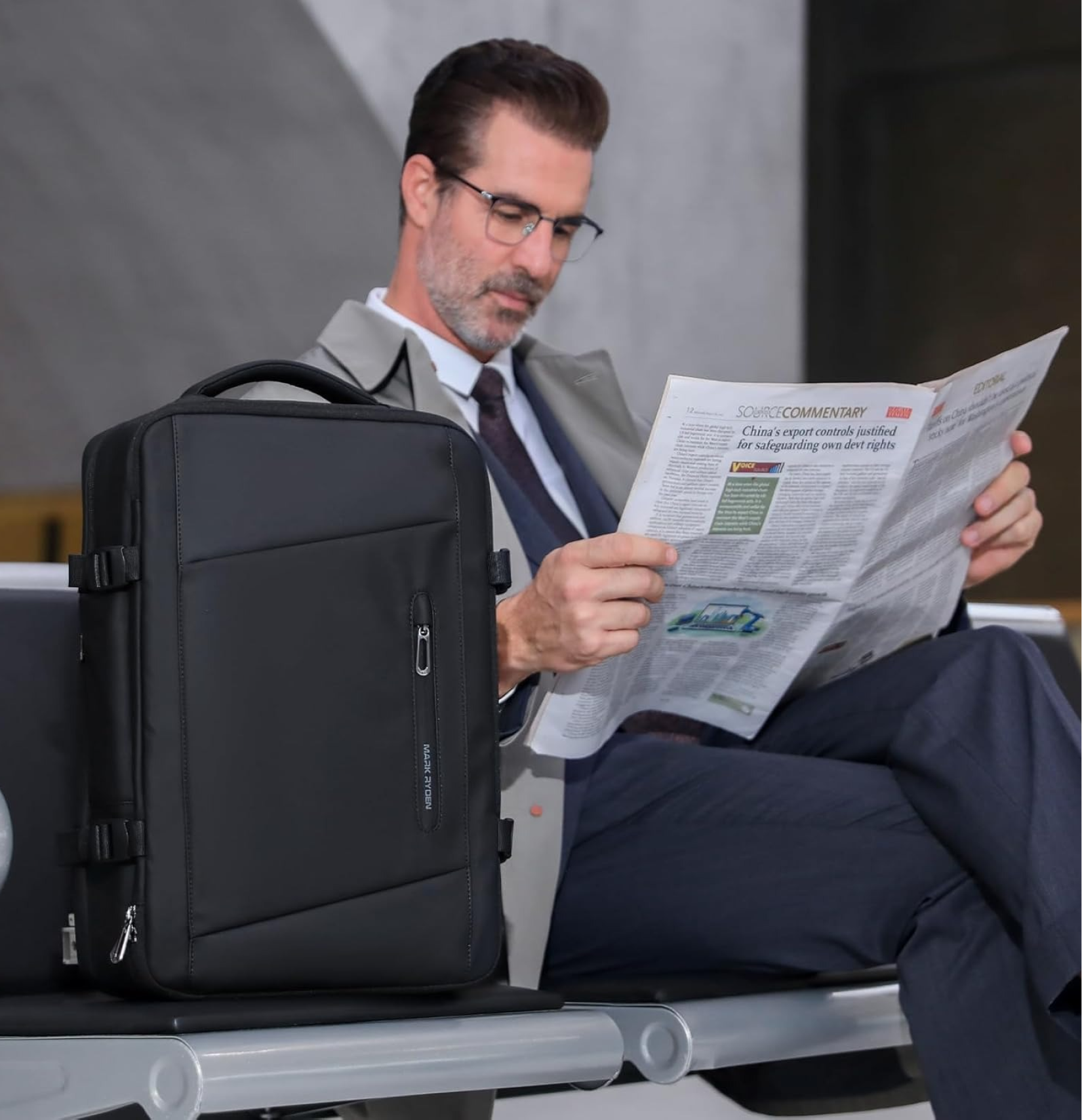
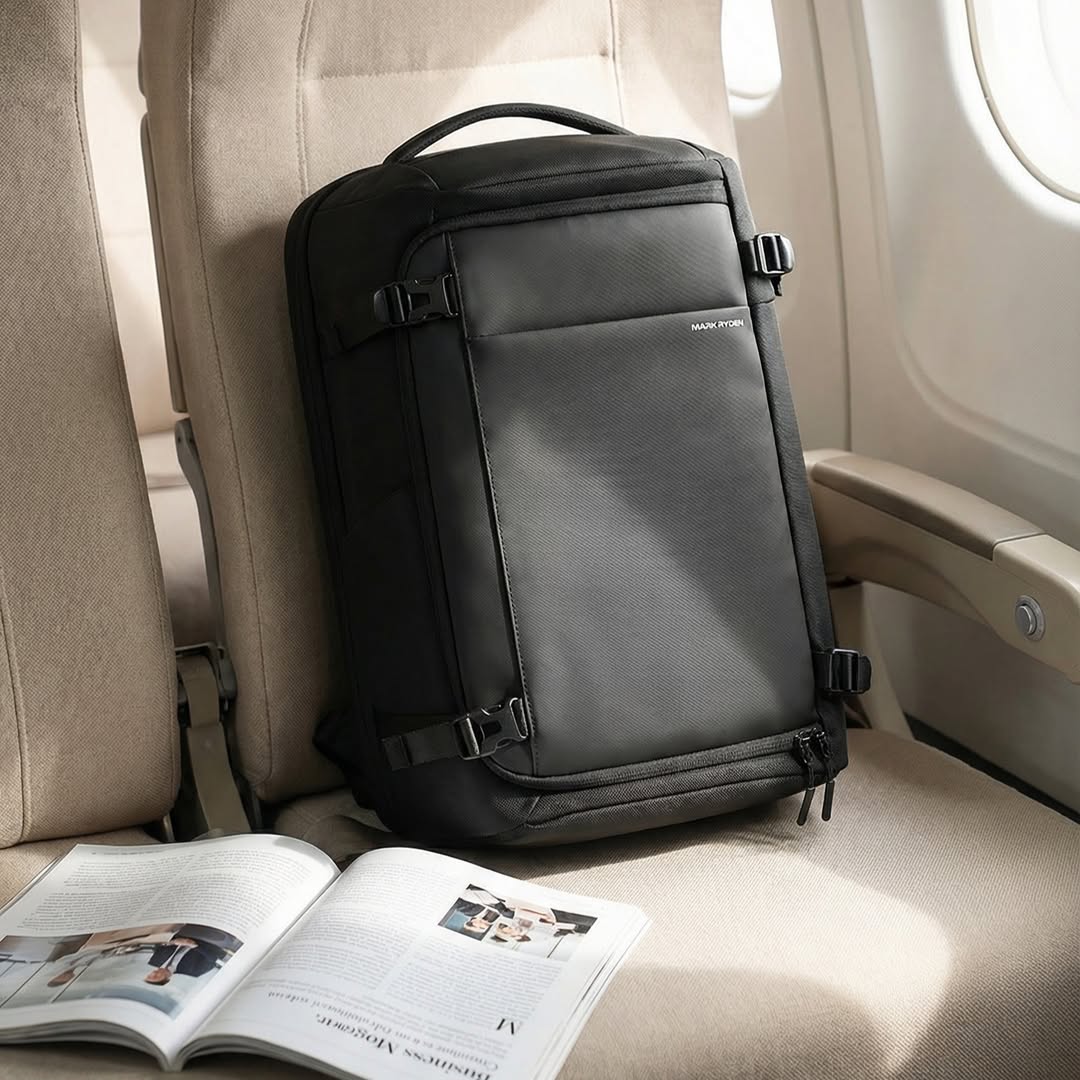
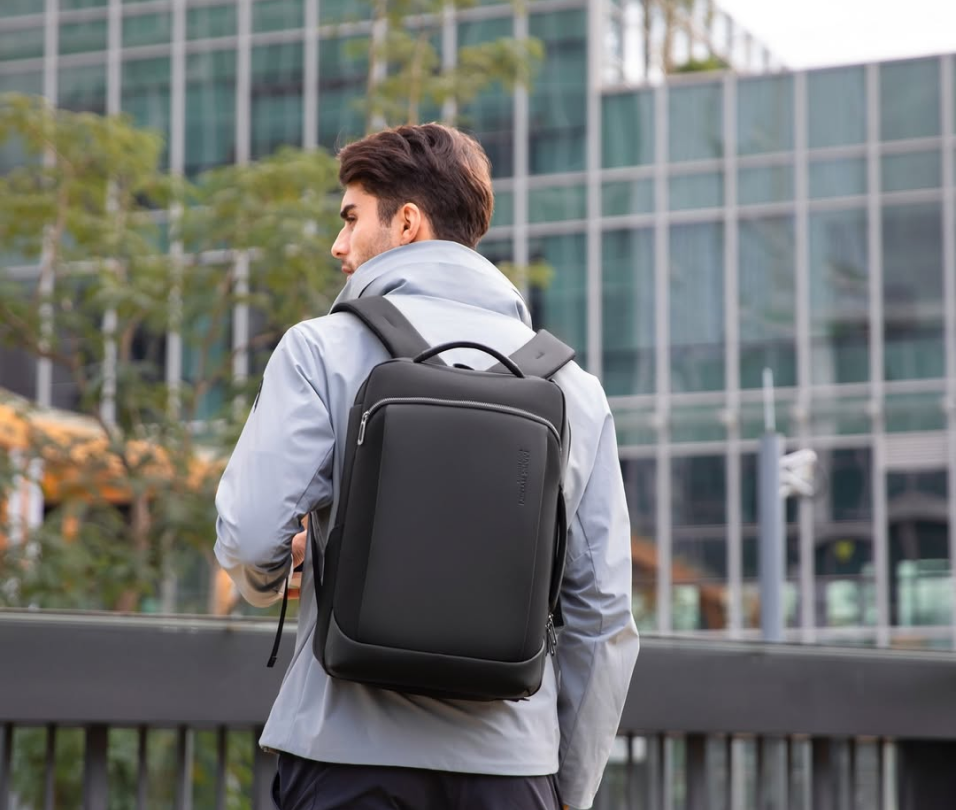
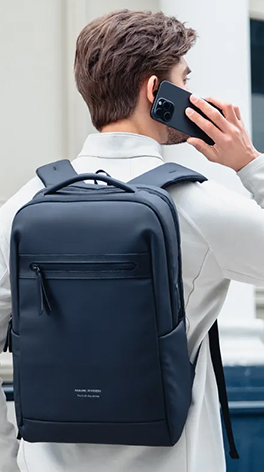
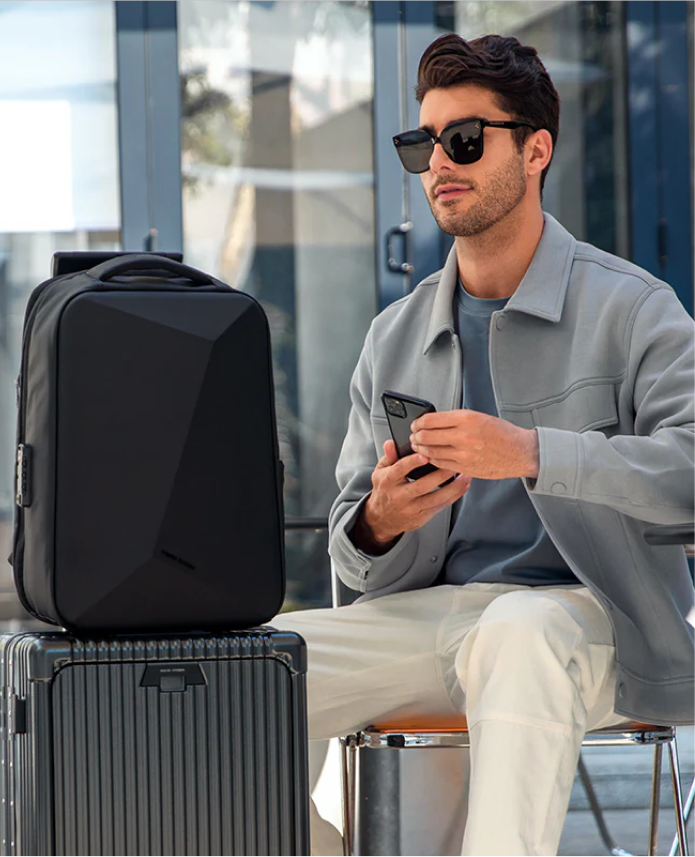
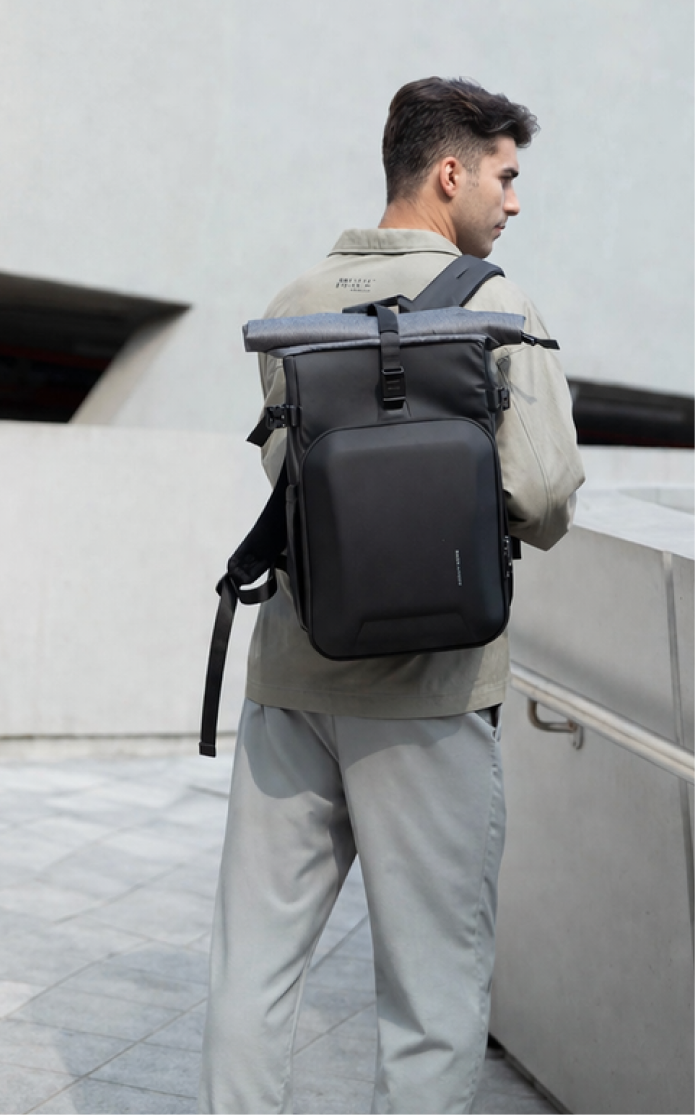
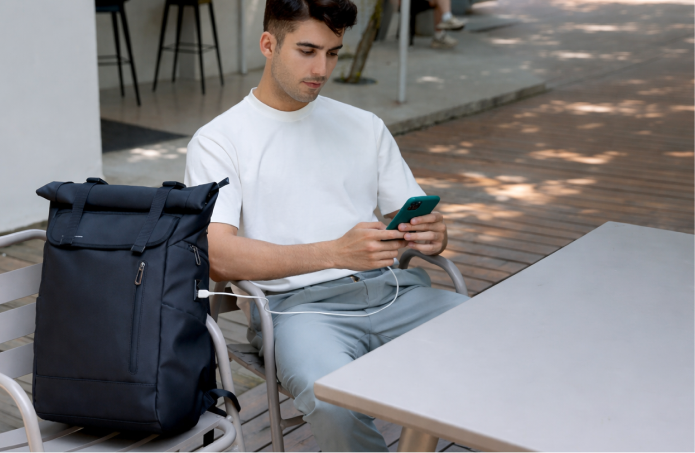
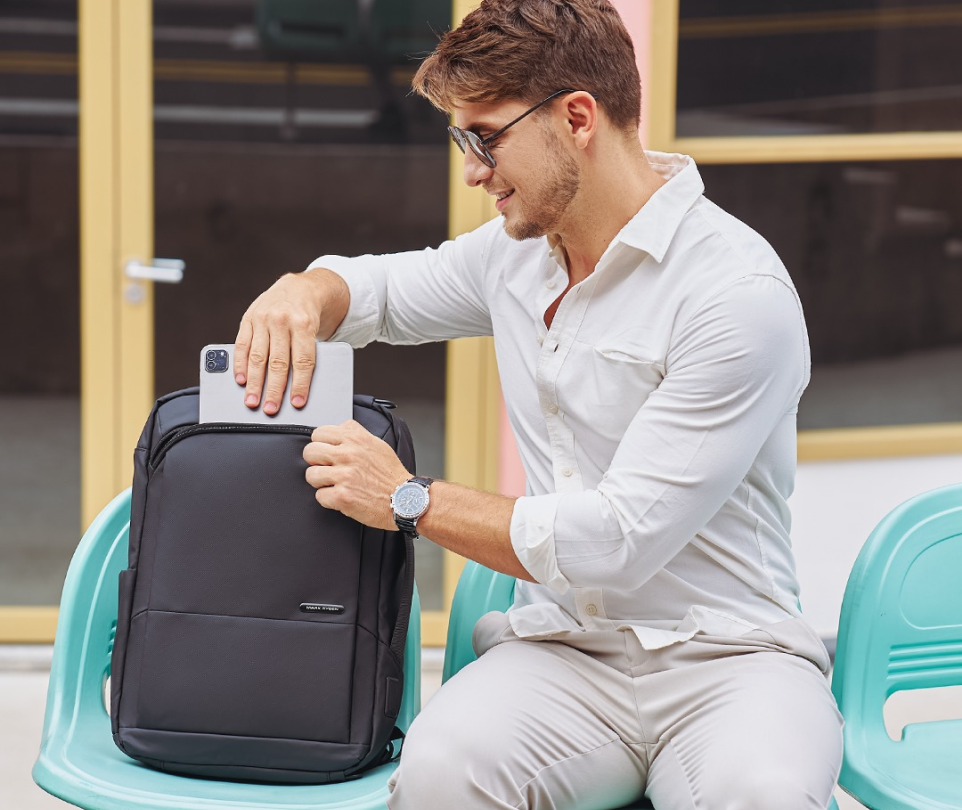
Carry-on backpack near luggage Traveller with carry-on backpack Traveller seated with backpack

How to fly without checked baggage, avoid gate fees, and choose the right backpack

Every year, millions of passengers across Europe pay unnecessary baggage fees not because they packed too much, but because they had the wrong bag or did not know the current rules.

The difference between “boarded for free” and “paid €70 at the gate” often comes down to a few centimetres or 300 grams of excess weight.

This guide covers the rules of 20+ European airlines, explains the technical specifications that actually matter when choosing a backpack, and gives you a practical system for packing 5 days without checking any luggage.

Three Terms You Need to Know

Before looking at size charts, you need to understand exactly what gets checked at the gate. European airlines distinguish between three categories.

Personal item backpack

Personal Item

A small bag that fits under the seat in front of you. Included for free in the base fare on most airlines, including budget carriers.

Typical dimensions: 40×30×20 cm.

This is the size enforced most strictly, because it determines whether the bag fits under the seat.
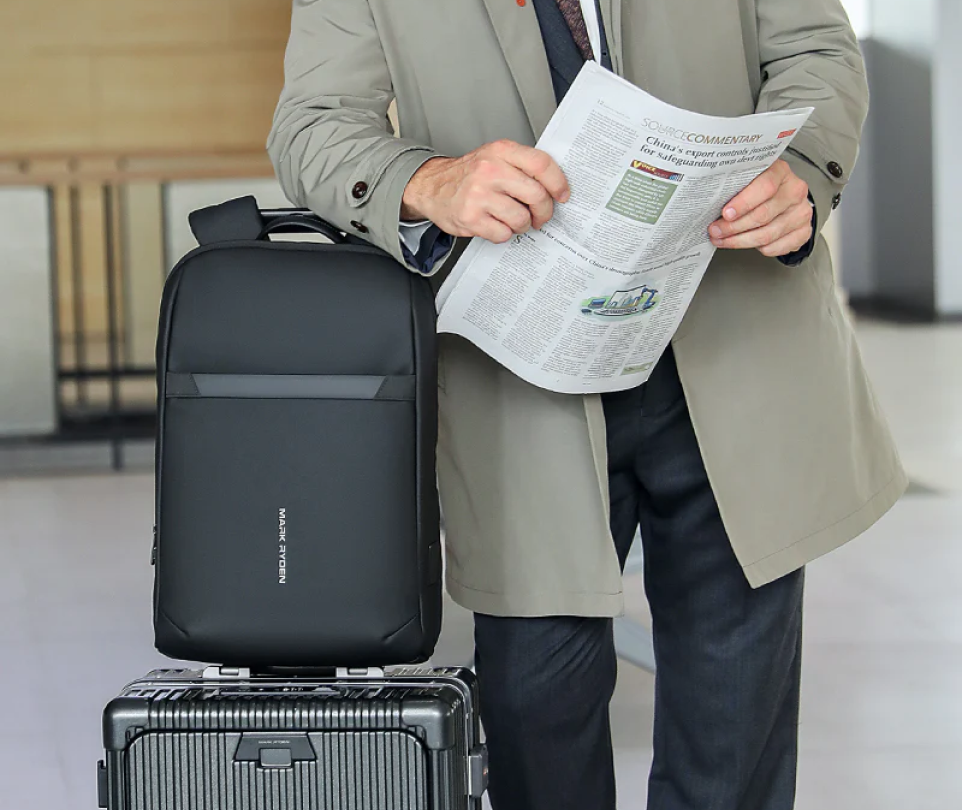
Priority boarding passenger

Cabin Bag

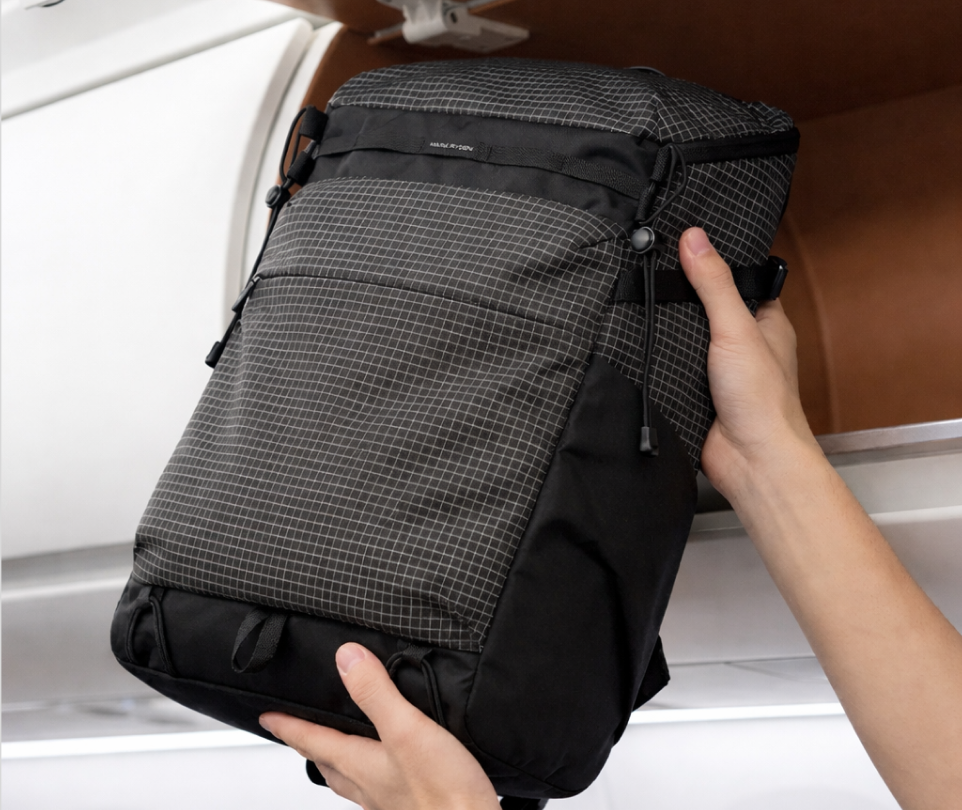
A small suitcase, larger bag, or backpack for the overhead locker. On full-service airlines (Lufthansa, British Airways, Air France) it is included in the ticket price.

On low-cost carriers (Ryanair, Wizz Air) it requires Priority Boarding or a separate fee.

Typical dimensions: 55×40×20–23 cm.

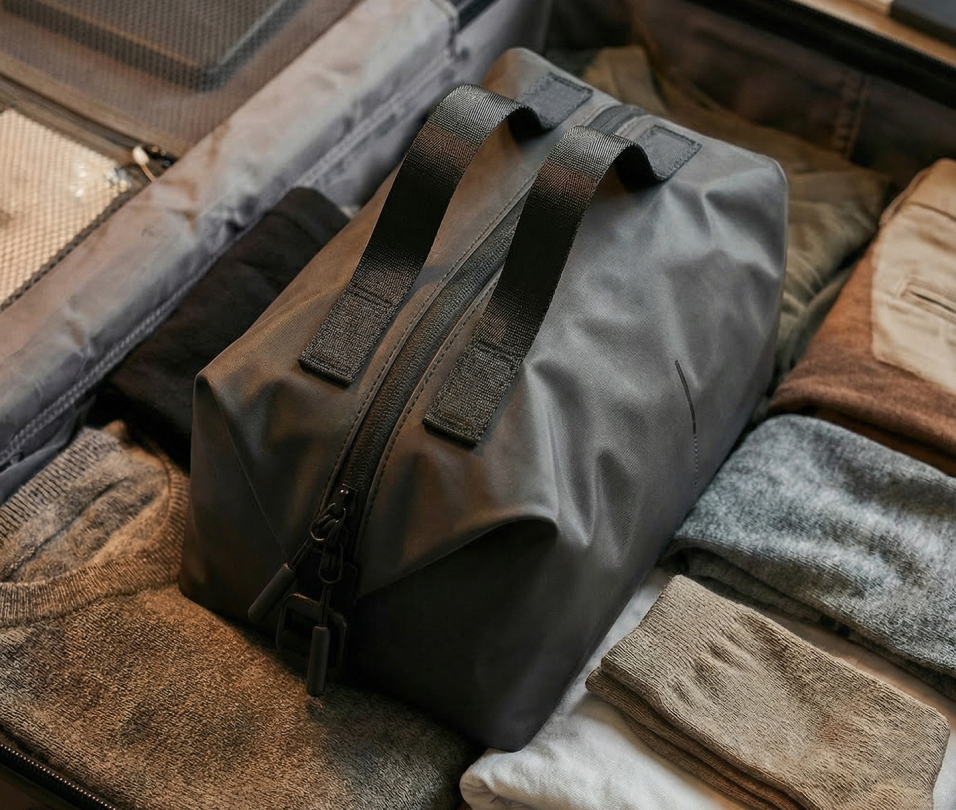
Cabin bag inside luggage

Priority Boarding

A paid option or higher fare tier that allows you to take a cabin bag into the overhead locker without extra charge.

On Ryanair this means that in addition to a 40×30×20 cm backpack, you can bring a second bag of 55×40×20 cm.

Key rule: on budget airlines without Priority you are entitled to one bag under the seat. If you board with a backpack and an additional bag — one will be taken from you, and it will cost more than Priority purchased in advance.
Size Table: 20+ Airlines 2026

Dimensions include handles and external pockets. The Enforcement column shows how strictly each airline checks the rules in practice.

Budget Airlines

Airline Personal Item (free) Cabin Bag (Priority/fee) Cabin Bag Weight Enforcement
Ryanair 40×30×20 cm 55×40×20 cm 10 kg Strictest. Sizer frame at gate.
Lauda Europe 40×30×20 cm 55×40×20 cm 10 kg Ryanair subsidiary. Identical rules and frame.
Wizz Air 40×30×20 cm 55×40×23 cm 10 kg Strict. Frame and weighing.
easyJet 45×36×20 cm 56×45×25 cm No limit* More flexible than Ryanair, occasional frame.
Vueling 40×20×30 cm 55×40×20 cm 10 kg Strict on size, lenient on weight.
Transavia 45×40×25 cm 55×40×25 cm 10 kg Often weigh bags.
Jet2 Up to 40×30×15 cm 56×45×25 cm 10 kg Generous cabin bag, rarely strict.

*easyJet: no official weight limit, but you must be able to lift the bag yourself.

Charter & Holiday Airlines

Airline Cabin Bag Weight Enforcement
TUI fly 55×40×20 cm 10 kg Rarely check weight.
Corendon 55×40×20 cm 8 kg Dimensions matter more than weight.
SunExpress 55×40×20 cm 8 kg Lenient with soft bags.
Pegasus 55×40×20 cm 8 kg Rarely weigh.
Windrose 55×35×15 cm 5 kg Small depth limit and low weight — watch out.

Full-Service Airlines

Airline Personal Item Cabin Bag (included in ticket) Weight Enforcement
Lufthansa 40×30×10 cm 55×40×23 cm 8 kg Strict on weight, flexible on shape.
Austrian Airlines 40×30×10 cm 55×40×23 cm 8 kg Same as Lufthansa.
Swiss (SWISS) 40×30×10 cm 55×40×23 cm 8 kg Same as Lufthansa.
Eurowings 40×30×25 cm 55×40×23 cm 8 kg Relatively lenient.
Air France 40×30×15 cm 55×35×25 cm 12 kg (combined) Visual check, rarely weigh.
KLM 40×30×15 cm 55×35×25 cm 12 kg (combined) Nearly identical to Air France.
Iberia 40×30×15 cm 56×40×25 cm 10 kg Moderate enforcement, large cabin bag.
ITA Airways 40×30×15 cm 55×35×25 cm 8 kg Similar to Air France/KLM.
British Airways 40×30×15 cm 56×45×25 cm 23 kg Most generous weight limit in Europe.
SAS 40×30×15 cm 55×40×23 cm 8 kg Lenient with soft bags.
Turkish Airlines Up to 40×30×15 cm 55×40×23 cm 8 kg Rarely weigh, strict on dimensions.
Norwegian 25×33×20 cm 55×40×23 cm 10 kg Small personal item — watch out.

Important: airline rules change — sometimes several times a year. Always check current information on your carrier's official website 24–48 hours before departure.

What the Official Rules Don't Tell You

Gate sizing frame Airline comparison mark

Ryanair and Wizz Air:
the gate maths

Both airlines use physical sizer frames at the gate. If your backpack doesn’t fit — on-the-spot check-in costs from €45 to €80 depending on the route and when you pay. Always more expensive than Priority bought in advance. See Ryanair backpacks and Wizz Air backpacks.

One critical point: dimensions matter more than volume in litres. A 20-litre backpack with a wide, rigid frame may fail the sizer, while a slim 25-litre soft pack sails through. Soft materials have another advantage: if the bag is borderline — it compresses slightly in the frame where a rigid construction won’t give a single millimetre.

A separate note on Ryanair: in August 2025 the airline updated the free personal item dimensions from 40×20×25 cm to 40×30×20 cm. If you see the old size on third-party websites — that information is out of date.

easyJet logo

easyJet:
the most generous budget airline

45×36×20 cm is the largest free personal item allowance among major low-cost carriers in Europe. Browse easyJet backpacks.

The airline almost never weighs bags, but still enforces dimensions. Depth matters more than capacity claims.

Air France logo KLM logo

Air France and KLM:
the weight trap

12 kg is the combined limit for your cabin bag and personal item together. In practice checks are usually visual.

A soft backpack with a neat profile attracts less attention than a bulky textile tote even if they are exactly the same size.

Lufthansa logo

Lufthansa:
8 kg is serious

Lufthansa is among the airlines that genuinely weigh bags at check-in and at the gate.

With an 8 kg limit, the empty weight of your backpack becomes a critical parameter. A backpack that weighs 1.2–1.4 kg empty gives you meaningfully more payload than a model that weighs 2 kg.

British Airways logo

British Airways:
Europe's most generous

56×45×25 cm and 23 kg is effectively small-suitcase territory. On BA flights, a 35-litre backpack can be a genuine carry-on solution.

Norwegian logo

Norwegian:
watch the personal item

Norwegian has an unusually small free personal item — just 25×33×20 cm. That is smaller than most competitors.

A proper carry-on backpack on Norwegian requires an upgrade or a higher fare.

Anatomy of a Carry-On Backpack: What Really Matters

Before looking at size charts, you need to understand exactly what gets checked at the gate. European airlines distinguish between three categories.

Traveller with carry-on backpack at the airport

External dimensions and soft construction.

The first thing to check before buying — not the volume in litres, but the dimensions in centimetres.

And pay attention to the material: soft sides give you margin in the sizer frame where a rigid construction gives none.

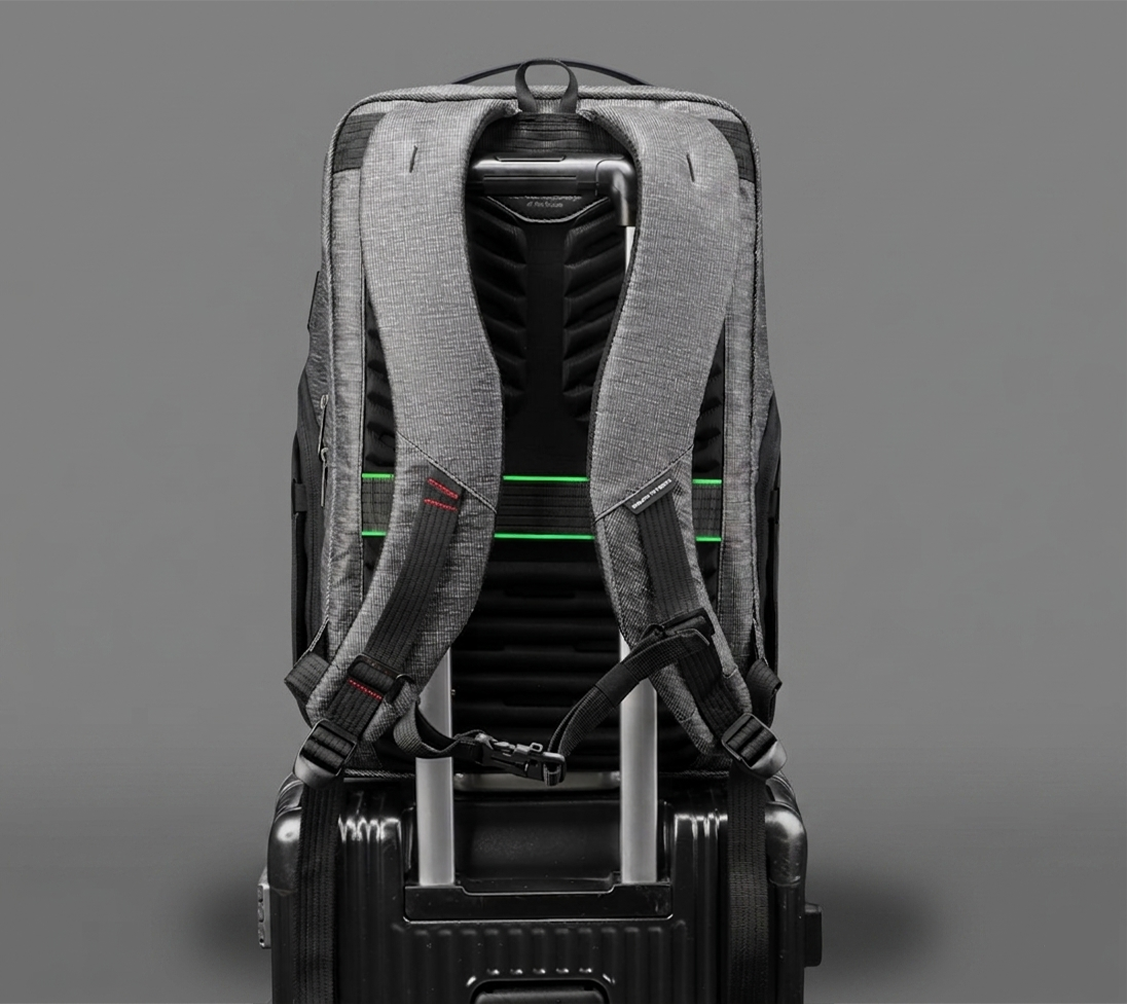
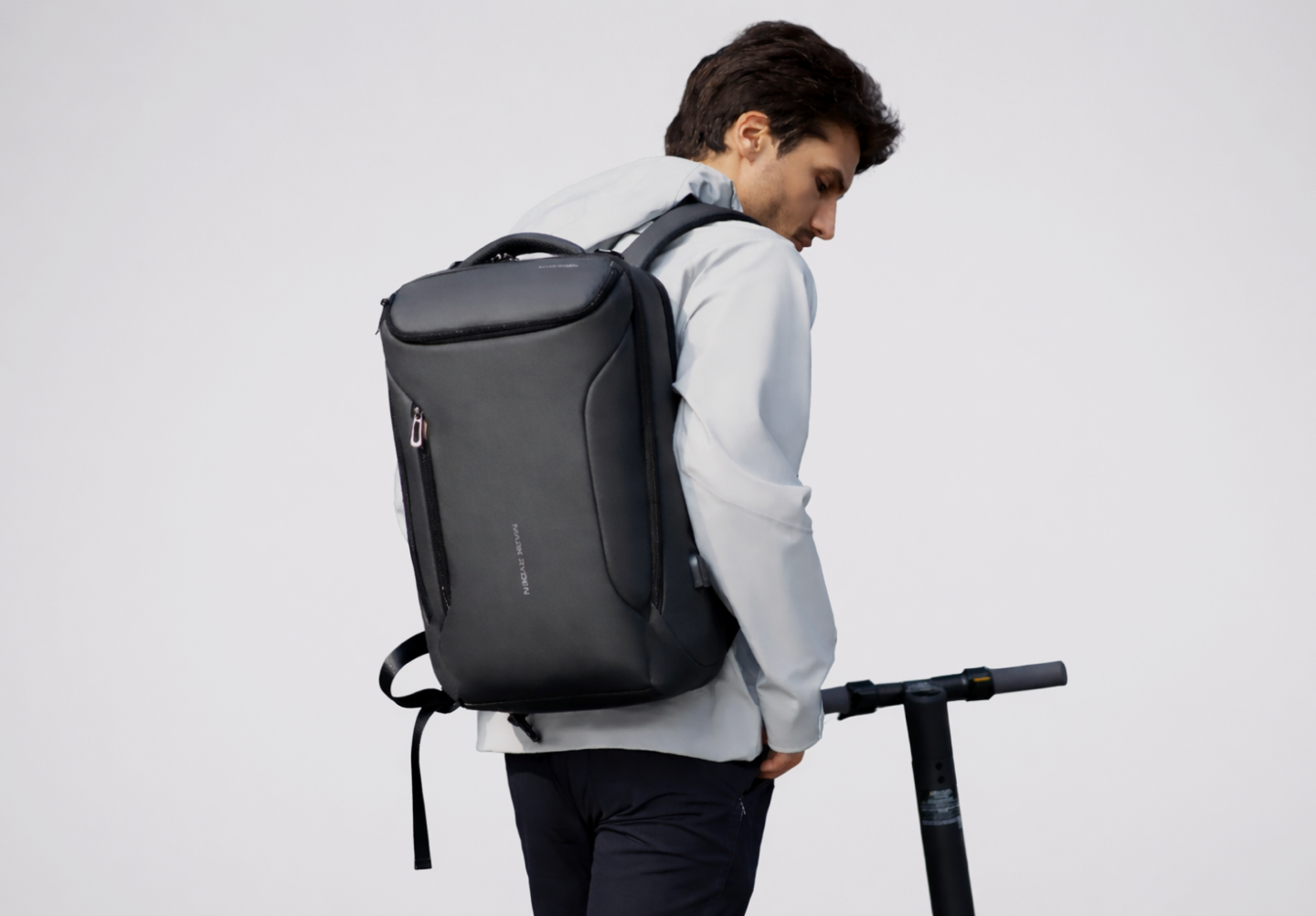
For example, the Mark Ryden Infinity Vacuum measures 46×30×16 cm, yet it fits even in the old 40×25×20 cm frame, let alone the current 40×30×20 cm frame.

And if a soft backpack is overpacked, you can always pull out a couple of items, put them on, and then push the bag into the frame.

A Smart Packing System

1

Principle 1: Capsule wardrobe

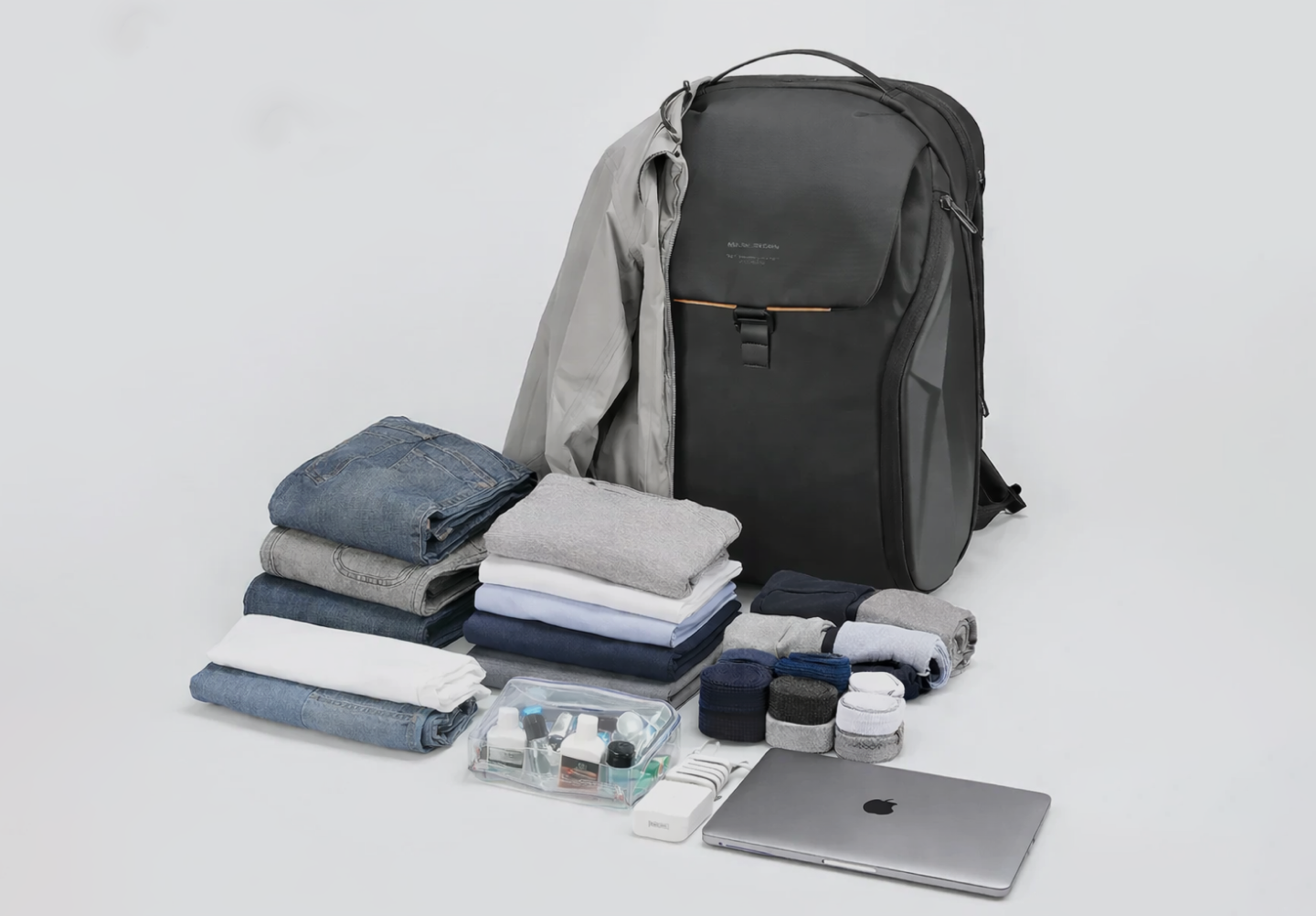
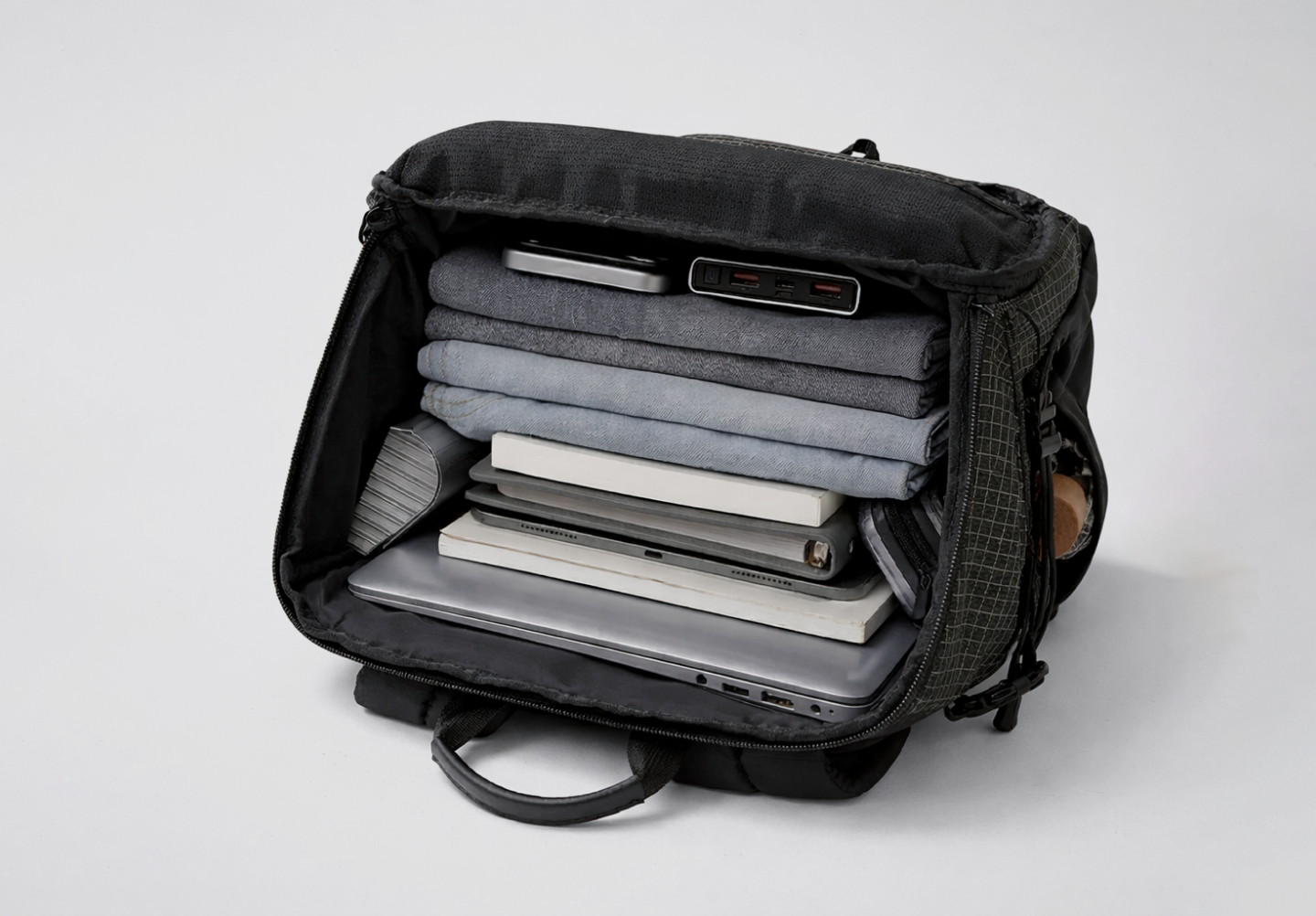
Instead of packing “just in case” — choose a base palette of 2–3 colours that mix and match. 5 items give 10+ outfit combinations. A concrete list for 4–5 days in 22 litres:

  • 2 pairs of trousers or jeans (one worn, one packed)
  • 4–5 T-shirts or shirts
  • 1 jumper or cardigan
  • 1 light jacket — worn on board
  • 4–5 sets of underwear and socks
  • Minimal toiletry kit in a clear bag ≤1 litre
  • Laptop + chargers + power bank up to 100 Wh
Capsule wardrobe packing layout
2

Principle 2: Vacuum organisers

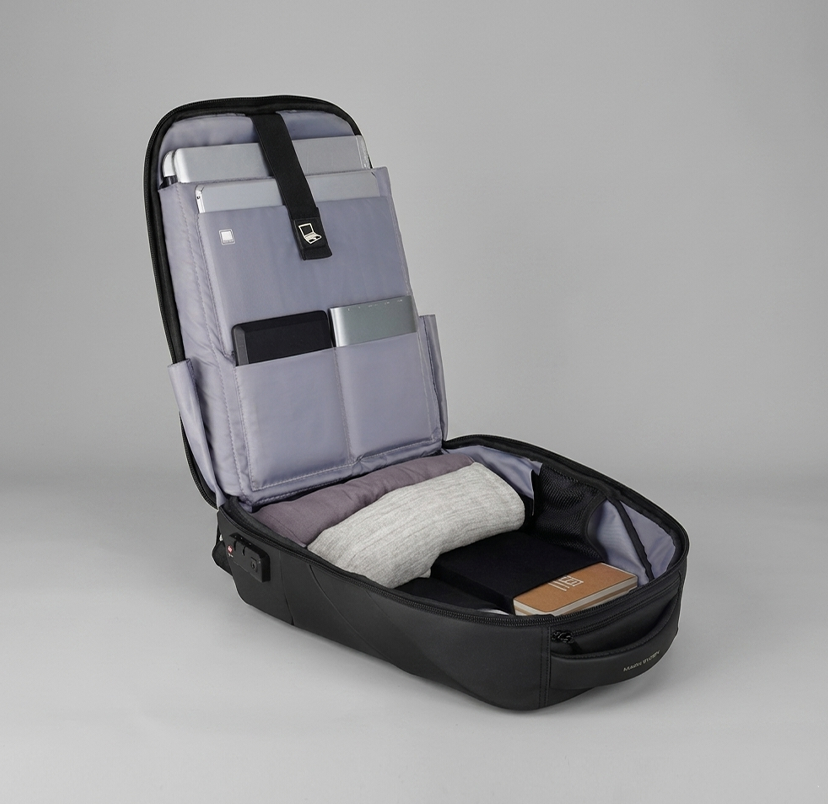
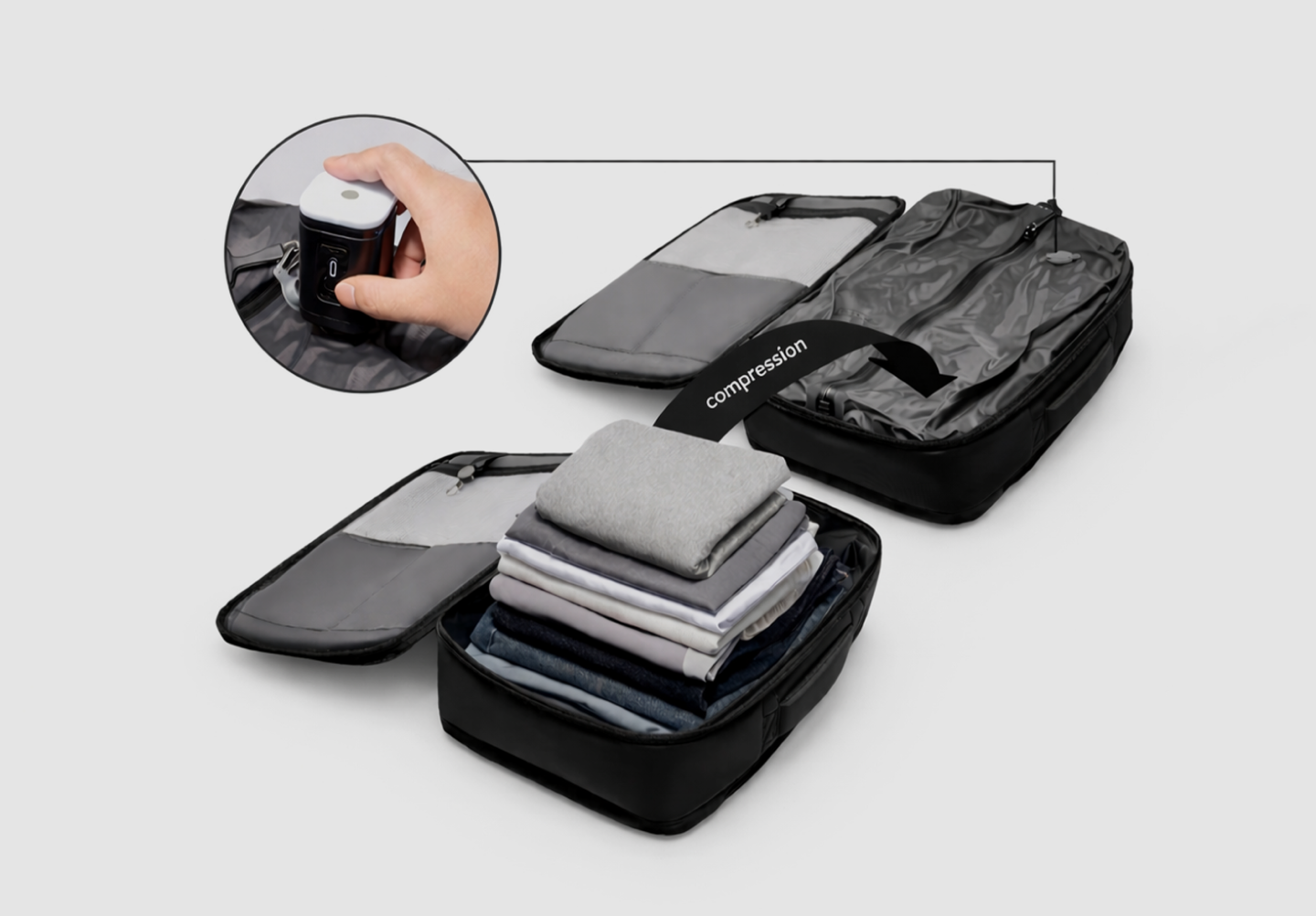
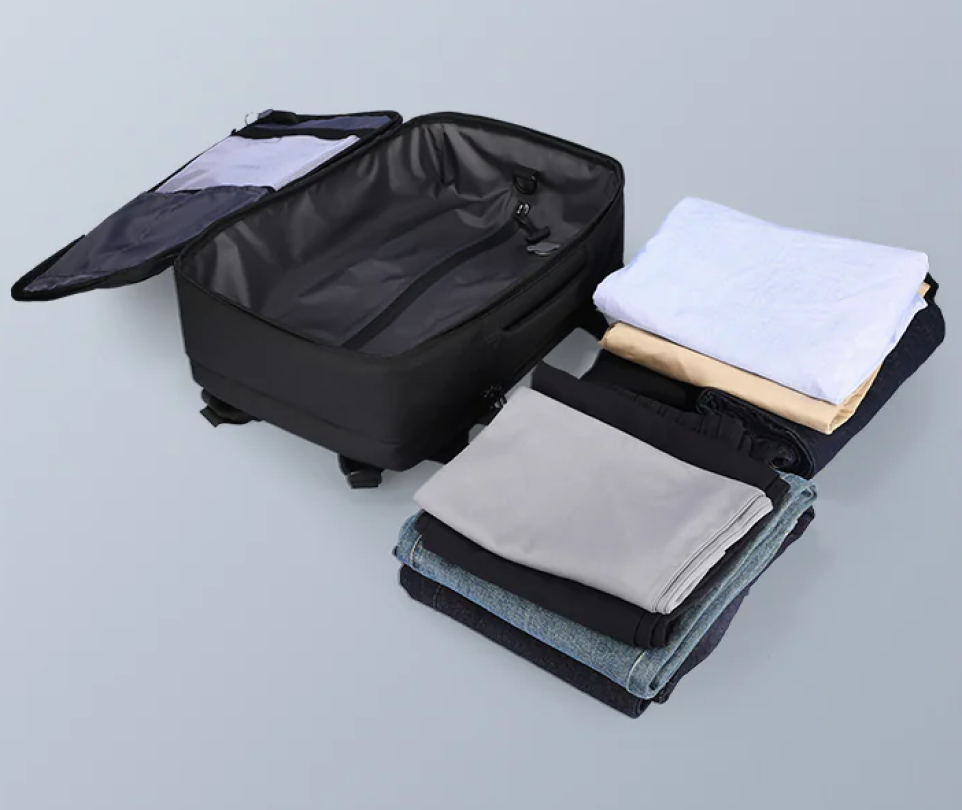
Vacuum compression organisers — whether built into the backpack or purchased separately — reduce clothing volume by 50% without increasing the external dimensions of the bag.

The principle is simple: lay clothes in, close the zip, and release the air. This system turns “there’s no way a week fits in there” into “there’s still room to spare”.

Vacuum organisers in a carry-on backpack
3

Principle 3: Heaviest items on you

Your jacket, a warm jumper, your heaviest pair of shoes — all worn at boarding.

Technically, clothing on your body doesn’t count as baggage and doesn’t affect the weight of your backpack.

Traveller carrying a backpack with heavy items worn separately
4

Principle 4: Heavy items close to your back and low

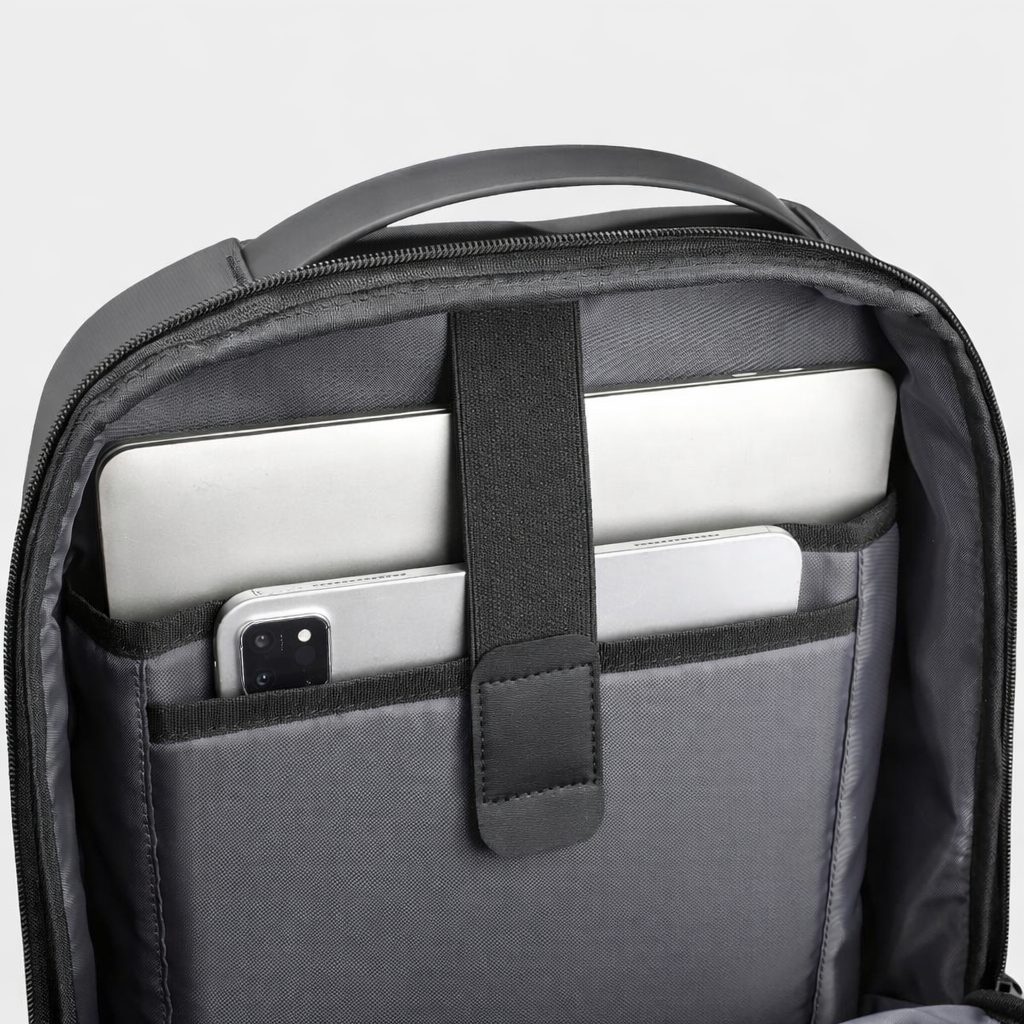
Laptop and chargers go in the compartment closest to your back. Shoes if you’re packing them — at the bottom. Clothes in the middle — roll them (rolling instead of folding saves space).

Toiletry bag and documents at the top for quick access at security. This weight distribution reduces shoulder strain during long walks.

Backpack interior showing low and close weight distribution

Liquids and the 100 ml rule

Toiletry items

All liquids in containers of up to 100 ml each, in a clear zip-lock bag of no more than 1 litre — one bag per person. Solid shampoo, solid soap and toothpaste tablets bypass this rule entirely and free up space in the bag for something useful.

Power bank

Power bank

Up to 100 Wh — carry-on without question. 100–160 Wh — permitted, but the airline may ask you to take it out for inspection. Over 160 Wh — banned on most airlines. Power banks must never be checked into the hold.

Carry-on for Different Travel Scenarios

City weekend carry-on backpack

City weekend, 2–3 days

Priorities: compact size, comfortable to walk with, qualifies as a personal item on Ryanair or easyJet without additional fees.

20–25 litres is enough with vacuum organisers. easyJet has the largest free personal item among budget carriers — 45×36×20 cm.

Packed suitcase for a longer trip

Business trip, 2–3 days

Priorities: quick access to documents and laptop, a backpack that looks at home in an office environment, passes security without unpacking.

Optimal volume: 20–25 litres. Lufthansa and Eurowings give the most freedom — 55×40×23 cm cabin bag included in the ticket.

Traveller wearing a larger carry-on backpack

Week-long trip

Priorities: maximum volume within cabin bag limits, 180° opening for convenient packing, luggage pass-through if you have other bags.

Volume 30–35 litres, dimensions within 55×40×20–23 cm. Lufthansa, British Airways, or Eurowings give the most room.

A carry-on backpack is not a restriction — it is a way to travel light, safe, and without unnecessary costs. The key is knowing your airline’s rules and choosing a model that matches both the dimensions and your personal needs. Check the current requirements before every trip — it is the best way to avoid unpleasant surprises at the gate.

Ready for a new rhythm of life?

Carry-on collection

Browse our carry-on backpack collection

A carry-on backpack is not a restriction — it is a faster, safer and more flexible way to move through airports when you know your airline and pack with intent.

Shop now

Tags : carry on, cabin bag, european airlines, backpack guide

Save 10% on
your next order

Create your account and get a special gift!

 
Mark Ryden Backpack